
MARKET BRIEF | February 2026
Trump Tariffs Expand & Escalate

The Trump administration has expanded tariffs across a wider range of industrial and strategic goods, including semiconductors, automotive components, and key areas of manufacturing. These measures are reshaping global sourcing strategies and increasing landed costs for U.S. importers. Companies are reassessing supplier diversification, nearshoring initiatives, and tariff engineering strategies to mitigate exposure. The impact is visible in shifting trade lanes, fluctuating container volumes, and heightened Customs compliance complexity. The broader significance lies in structural supply chain realignment rather than short-term disruption, with tariff policy now functioning as a long-term industrial and geopolitical lever.
Congress Moves to Repeal Tariffs on Canada
The U.S. House of Representatives passed legislation aimed at rescinding tariffs imposed on Canadian imports, signaling bipartisan unease with elements of the Trump administration’s trade strategy. While final implementation depends on Senate action and executive approval, the vote introduces meaningful policy uncertainty. For cross-border supply chains — particularly automotive, energy, and industrial sectors integrated across North America — this creates volatility in pricing, contracting, and transportation planning.
U.S. & Taiwan Strike Trade Deal
The United States finalized a trade agreement with Taiwan that reduces selected tariff barriers while strengthening bilateral economic ties in technology and semiconductor sectors. The agreement reflects a strategic shift toward targeted tariff relief aligned with geopolitical priorities. By lowering barriers in high-value industries, the deal reinforces Taiwan’s role in advanced manufacturing supply chains while encouraging reciprocal market access. The development may drive increased airfreight and ocean movements in electronics and precision components. More broadly, this could be a signal that tariff policy is evolving toward selectively structured economic partnerships.
AI Disruption Shock in Public Logistics Markets
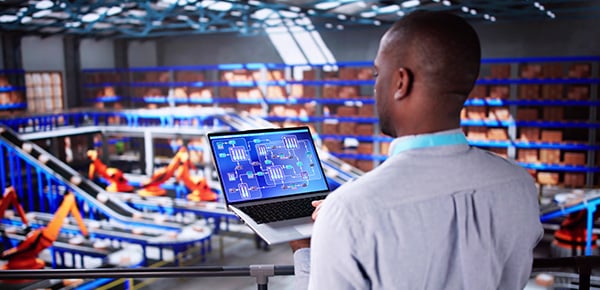
Shares of major logistics and trucking companies fell sharply following the launch of an AI freight optimization platform by Algorhythm Holdings. Investors reacted to claims that automation could materially improve network efficiency and reduce brokerage dependence. Although large-scale commercial impact remains uncertain, the market response reflects growing sensitivity to AI-driven disintermediation across asset-light logistics models. The episode highlights how technology narratives are influencing valuation and capital allocation decisions within transportation markets.